15yrs
Nick Gray. Ex Hennessy and Porsche.
15yrs
Nick Gray. Ex Hennessy and Porsche.
Most of what makes a property photograph well happens before I arrive. Work through this list the day before and the morning of the shoot, room by room.
Book any cleaning for the day before, not the morning of. Replace blown bulbs, and make sure every lamp works. Mow the lawn and sweep the paths. If there’s a hot tub, fill it and clean the cover.
Wash the windows inside and out, especially the ones that look onto the view. Dirty glass shows up clearly when the sun comes through it.
Tell me about anything that can’t be moved or hidden, so I can plan the angles around it.
The camera sees every object in a room, and a wide frame makes clutter look worse than it does in person. As a rule, clear about half of what is on any surface, then step back and clear a little more.
Personal items go too: family photographs, fridge magnets, post, medicine, chargers. A buyer or a guest should be able to picture themselves in the room, not the people who live there now.
You don’t need to buy anything. A bowl of fruit, a vase of cut flowers from the garden, one folded throw and a stack of two books do more than a room full of new accessories.
Keep colours calm and repeat them from room to room, so the set reads as one house.
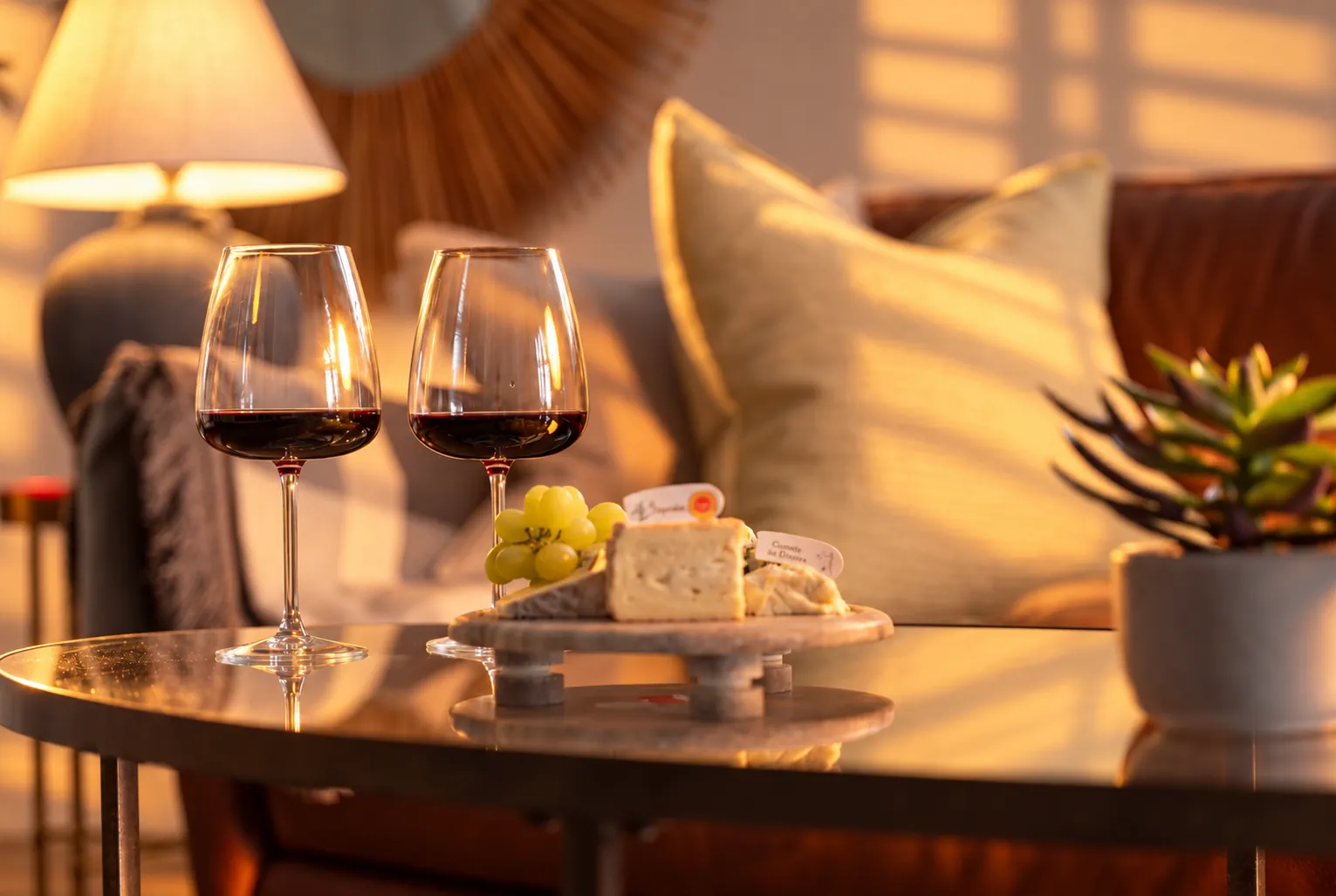
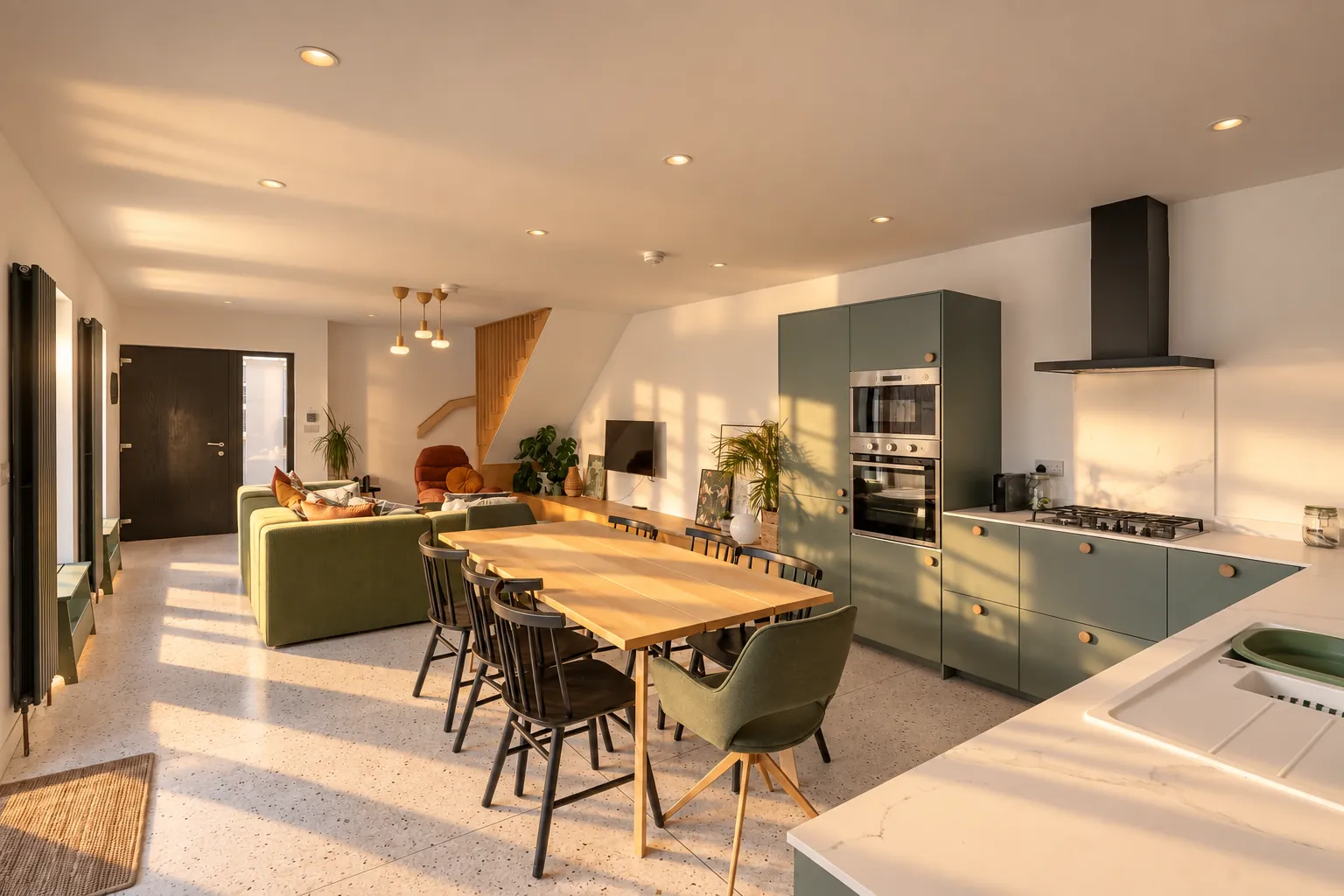
Open every blind and curtain fully, including the ones you usually keep half closed. Then switch on every lamp and ceiling light. Mixed light looks warm and lived in, and dark corners look small.
Check the bulbs match. One cold white bulb in a room of warm ones shows up in every frame.
Leave the lights on as I move from room to room. It saves time on the day, and it means every room is ready when the light outside is at its best.
Move cars off the drive and away from the front of the house. Put bins out of sight. Clear the doorstep, open the gates and take down anything temporary, like washing or a hose.
Clear the hall of shoes, coats and post. Leave one good item, like a bench or a plant, and nothing else.
Straighten the cushions and fold one throw. Clear the coffee table except for one or two things. Hide remotes, chargers and cables. Open every blind and curtain fully.
Clear the worktops almost completely: no kettle, toaster, cloths or washing-up liquid. Leave a bowl of fruit or a single plant. Empty the sink and close every cupboard.
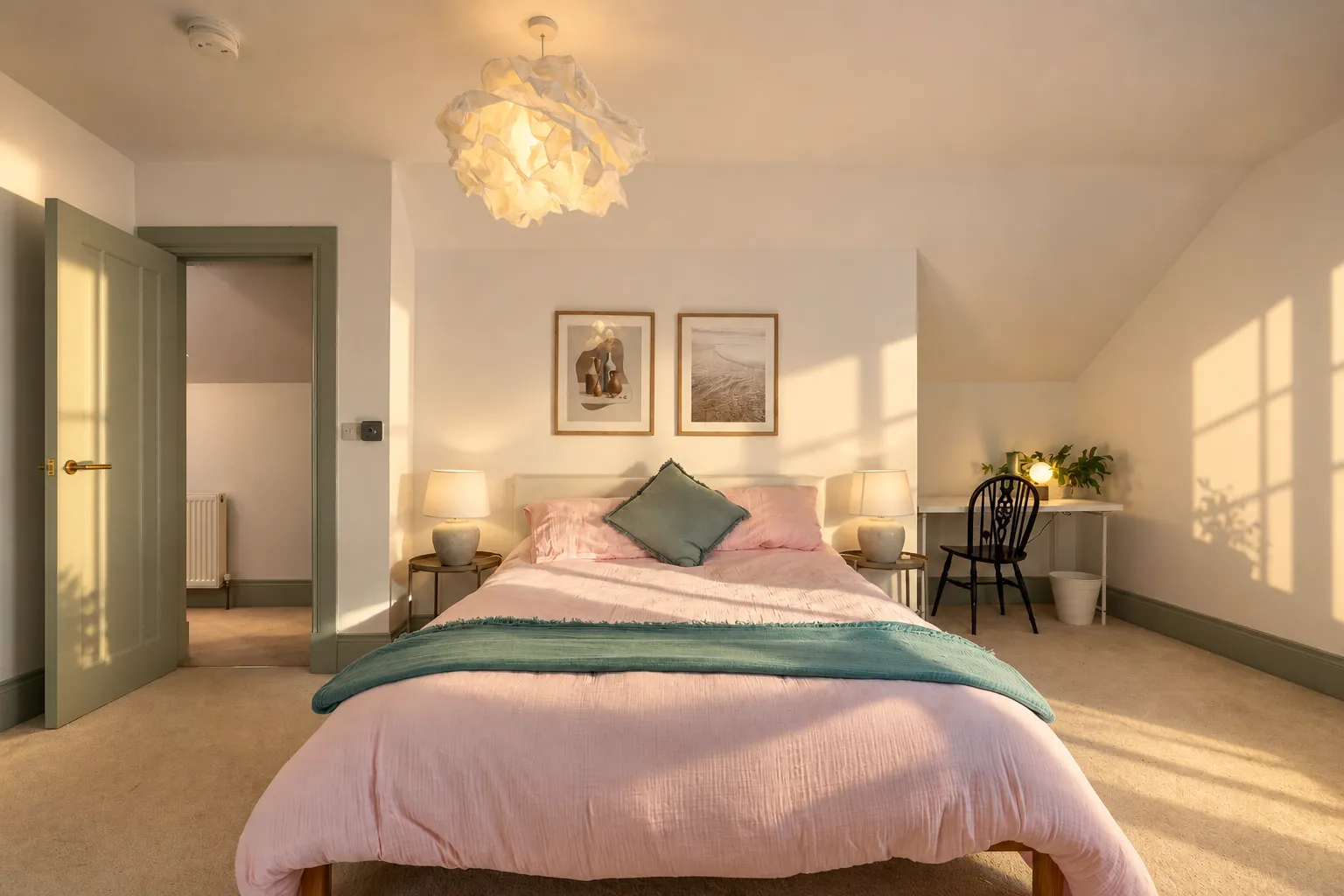
Make the beds the way a guest would find them, with fresh, pressed linen and the pillows plumped. Clear the bedside tables to a lamp and one book. Put away clothes and bags.
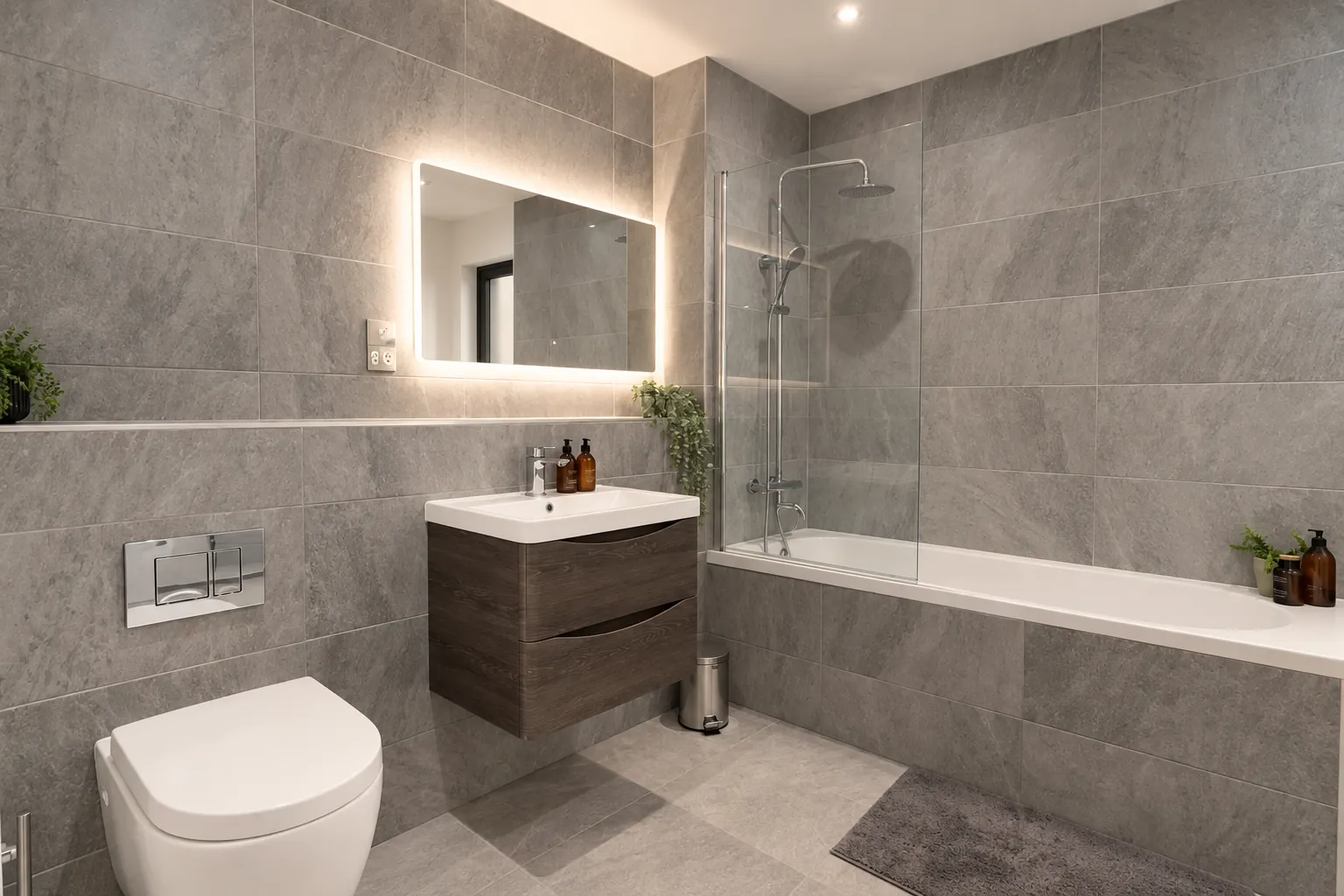
Put the toilet seat down. Fold fresh towels. Remove toiletries, bath mats and bins. Clean the mirrors and the glass, because every mark shows.
Set out the outdoor furniture and remove covers. Sweep the patio and deadhead anything in pots. Clear toys, tools and hoses. If there’s a fire pit or a hot tub, have it ready to use.
Switch on every light, including lamps and under-cabinet lights. Turn off the TVs and close the toilet lids. Keep pets and people out of the rooms being shot, and let me move furniture a little if a room needs it.
Set the table for two, light the fire if there is one, fill and uncover the hot tub, and put out the welcome touches a guest will find: towels on the bed, a basket of logs, the board games on a shelf.
Put the rooms back the way you like them. When the files arrive, look at them in order on a phone first, because that is where most buyers and guests will see them.
If something has changed since the shoot, a new kitchen, a repainted room, a garden in full summer, the photographs are worth updating. A gallery that matches the property is the one that gets the booking.
A room that’s been cleared and lit properly photographs larger, brighter and calmer, and that’s what a buyer or a guest responds to.
If you’re getting a holiday let ready, the holiday let photography page covers how I shoot for bookings. For homes and developments, see property photography.
Thanks. I’ll be in touch soon.